by Cynthia R.
A penny for your thoughts? Not anymore. It’s a nickel now.
After a 230-year run, the U.S. minted its very last penny on November 12, 2025, officially bringing the production of the one-cent coin to an end. It may just be “small change,” but discontinuing the penny will have a noticeable impact on everyday cash transactions.
Pennies are still legal tender, and businesses can continue pricing items down to the cent. However, when you pay with cash, the amount you hand over (and the change you get back) will start to look a little different.
Why Was the U.S. Penny Discontinued?
The first U.S. pennies entered circulation in 1793. Although the design of these beloved copper coins has evolved many times over the centuries, their continued production carried on steadily. Until now.
Modern pennies are made of mostly zinc with a thin copper coating, but even then, rising metal prices and production costs have made them increasingly inefficient to produce. According to the U.S. Mint’s 2024 annual report, each penny cost 3.69 cents to make. That’s more than double the amount it was a decade ago (1.42 cents).
In total, the Mint reported losing $85.3 million from producing nearly 3.2 billion pennies in 2024.
That, coupled with an increasing number of Americans opting for cashless transactions, led the Trump administration to decide that minting the penny is no longer worth the cost.

How Will U.S. Retailers and Businesses Handle Exact Change?
You’re probably wondering what the death of the U.S. penny means for you.
While no federal rounding mandate has been established yet, most U.S. retailers will likely implement rounding on cash payments – a system already in use in Canada, Australia, New Zealand, and other countries that said goodbye to their lowest-denomination coin.
For cash transactions, totals will likely be rounded to the nearest nickel. It’s important to note that rounding applies only to the final total, not to individual prices.
Electronic transactions (card and digital payments) will not be affected. The charged amounts will remain exact to the cent.
How to Prepare (If You Still Use Cash)
If you regularly use cash, here are some tips:
- Expect rounding to the nearest nickel. Cash amounts paid or received may be rounded to the nearest nickel.
- Spend your pennies sooner rather than later. Many retailers and banks are already limiting penny distribution. You should spend them while they’re still accepted.
- Convert your coin jar. Did you know the average American household has $60-$90 in unused coins? If you have a full piggy bank at home, consider exchanging its contents at a bank or coin-cashing machine. Just check with your bank or the machine beforehand to see if any requirements or fees apply.
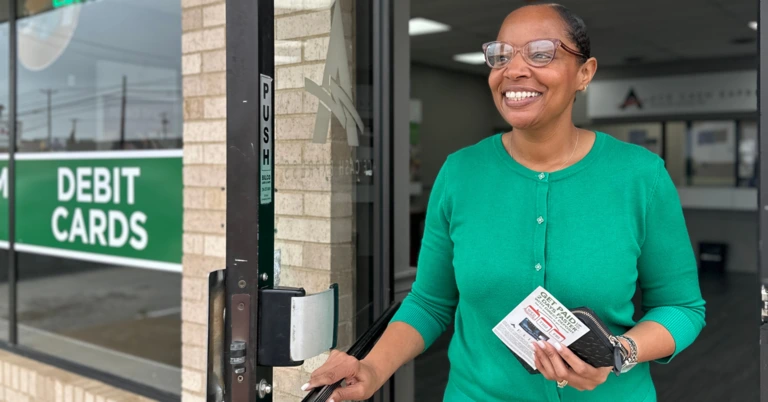
What to Expect at ACE Cash Express
ACE Cash Express offers a wide range of money services, such as bill payment, check cashing, money transfers, money orders, and more. With the end of penny production, ACE cash transactions are now rounded to the nearest nickel – the same practice expected across U.S. retailers and businesses.
And to make things easier, some service prices have been adjusted to ensure any rounding that takes place is to the benefit of the consumer. These updates are already in place at all ACE locations, and additional adjustments may occur over time as nationwide rounding practices continue to develop.
As everyone adjusts to the penny discontinuation and rounding changes, you can still expect the same fast and convenient service at ACE you’ve always relied on!
Frequently Asked Questions
Is rounding to the nearest nickel an ACE-specific practice?
No. With the U.S. penny being discontinued, rounding to the nearest nickel is a standardized practice applied across participating retailers and businesses nationwide. At ACE stores, rounding on cash transactions is applied in a manner that benefits the consumer.
If I use cash, will I pay more because of rounding?
Not necessarily. Since rounding goes both ways, the small changes typically balance out over time.
Will pennies still be accepted as payment?
Yes. Pennies remain legal tender and can still be used for cash transactions.
Can I still deposit pennies at my bank?
Yes. Most banks and credit unions will accept pennies for deposit or exchange. Check with them ahead of time to see if the pennies need to be rolled or if there are associated fees.
What does discontinuing the penny mean for the future of cash?
The penny is no longer being produced, but it will stay in circulation for some time. The biggest change consumers will notice is that cash payments may be rounded to the nearest nickel, while electronic payments remain unchanged.
This blog is not intended to provide any tax, legal, financial planning, insurance, accounting, investment, or any other kind of professional advice or services. To make sure that any information or suggestions in this blog fit your particular circumstances, you should consult with an appropriate tax or legal professional before taking action based on any suggestions or information that we provide.
Sources
- https://www.usmint.gov/news/press-releases/united-states-mint-hosts-historic-ceremonial-strike-for-final-production-of-the-circulating-one-cent-coin
- https://www.usmint.gov/learn/history/us-circulating-coins
- https://www.forbes.com/sites/kellyphillipserb/2025/11/13/what-the-end-of-the-penny-means-for-consumers/
- https://www.usmint.gov/content/dam/usmint/reports/2024-annual-report.pdf
- https://www.usmint.gov/news/media-kit/penny
- https://www.pewresearch.org/short-reads/2022/10/05/more-americans-are-joining-the-cashless-economy/
- https://www.frbservices.org/binaries/content/assets/crsocms/financial-services/cash/101322-us-coin-supply-chain-final-report.pdf
- https://www.atlantafed.org/blogs/macroblog/2025/11/03/rounding-rules-and-cash-inflation-when-we-no-longer-make-cents

